Deasy is richly characterized by a host of little physical
details that make him appear antiquated and decrepit: his
"gaitered feet, the "angry white moustache" that is also
called a "rare moustache" as he blows the wispy threads away
from his mouth, "the honey of his ill-dyed head," the
"coughball of laughter [that] leaped from his throat dragging
after it a rattling chain of phlegm." Preparing to utter
wisdom, "He raised his forefinger and beat the air oldly
before his voice spoke." These unimpressive physical
attributes cohere with his habit of not listening to what
other people are saying, and his curmudgeonly insistence on
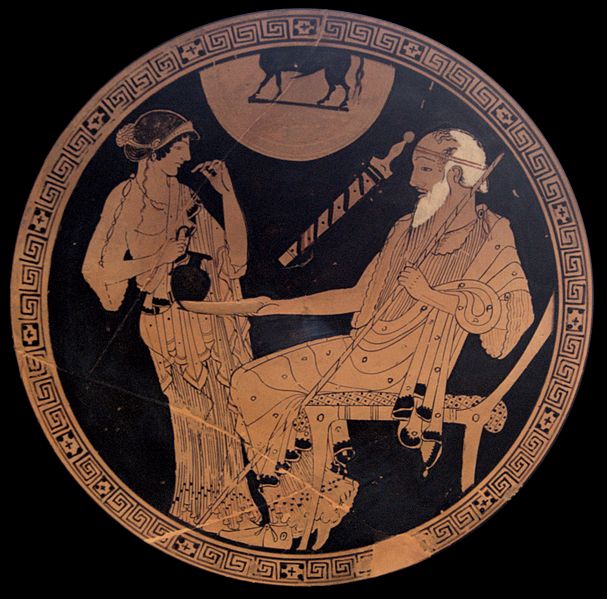
giving unwanted advice. Joyce was thinking of the Nestor of
Homer's Odyssey, very old and very wise, so he made
Deasy seem very old (though not very wise), even though Irwin
was born in 1859 and so would have been only 45 when Joyce
knew him.
According to Ellmann, Irwin was "an Ulster Scot, very
pro-British," and a graduate of Trinity College (153). He "is
presented under the name of Deasy, oddly inappropriate for an
Ulster Scot, and his personality is merged with that of an
Ulsterman Joyce knew in Trieste, Henry Blackwood Price,
who had Deasy's preoccupation with a distinguished Ulster
ancestry and shared his interest in the hoof-and-mouth disease.
Joyce represents Deasy as a grass
widower, although Price was happily married and Irwin
was a bachelor who lived with a sister, but in other respects
treats him indulgently, sparing, for example, any mention of
his red nose, or of the shutting-down of the school soon after
because of Irwin's alcoholism." Vivien Igoe notes that
although Irwin attended TCD, "there is no record of his
graduation."
Joyce's character shares Irwin's conservative Protestant
outlook, but his fictional name suggests some kind of
authorial comment. Gifford supposes that it "may owe something
to the Deasy Act (1860), an act ostensibly intended for land
reform in Ireland but in practice a ruthless regulation of
land tenancy in favor of landlords (i.e., in favor of the
pro-English, anti-Catholic Establishment)" (33). Slate,
Mamigonian, and Turner note that the Irish name Déisi
was historically associated with"subject peoples who
pay 'vassal tribute' (deisis) to their rulers,"
suggesting perhaps (they do not speculate about the
implications) a sycophantish subservience to British imperial
rule.
Whatever echoes Joyce may have intended to convey by the
name, it seems clear that he meant to imply political, ethnic,
religious, and cultural incompatibilities between the
headmaster and his employee. Deasy regards the Catholic,
nationalist, freethinking, presumably "fenian" Stephen as an
antagonist: "I like to break a lance with you, old as
I am." Stephen might well say of him what he says
in Circe about the British soldiers: "I seem to
annoy them. Green rag to a bull." In addition to his
Protestant respect for money, from which the wildly prodigal Stephen
might learn something,
Deasy represents many values that are simply repellent to
Stephen: unionism, antisemitism, misogyny.
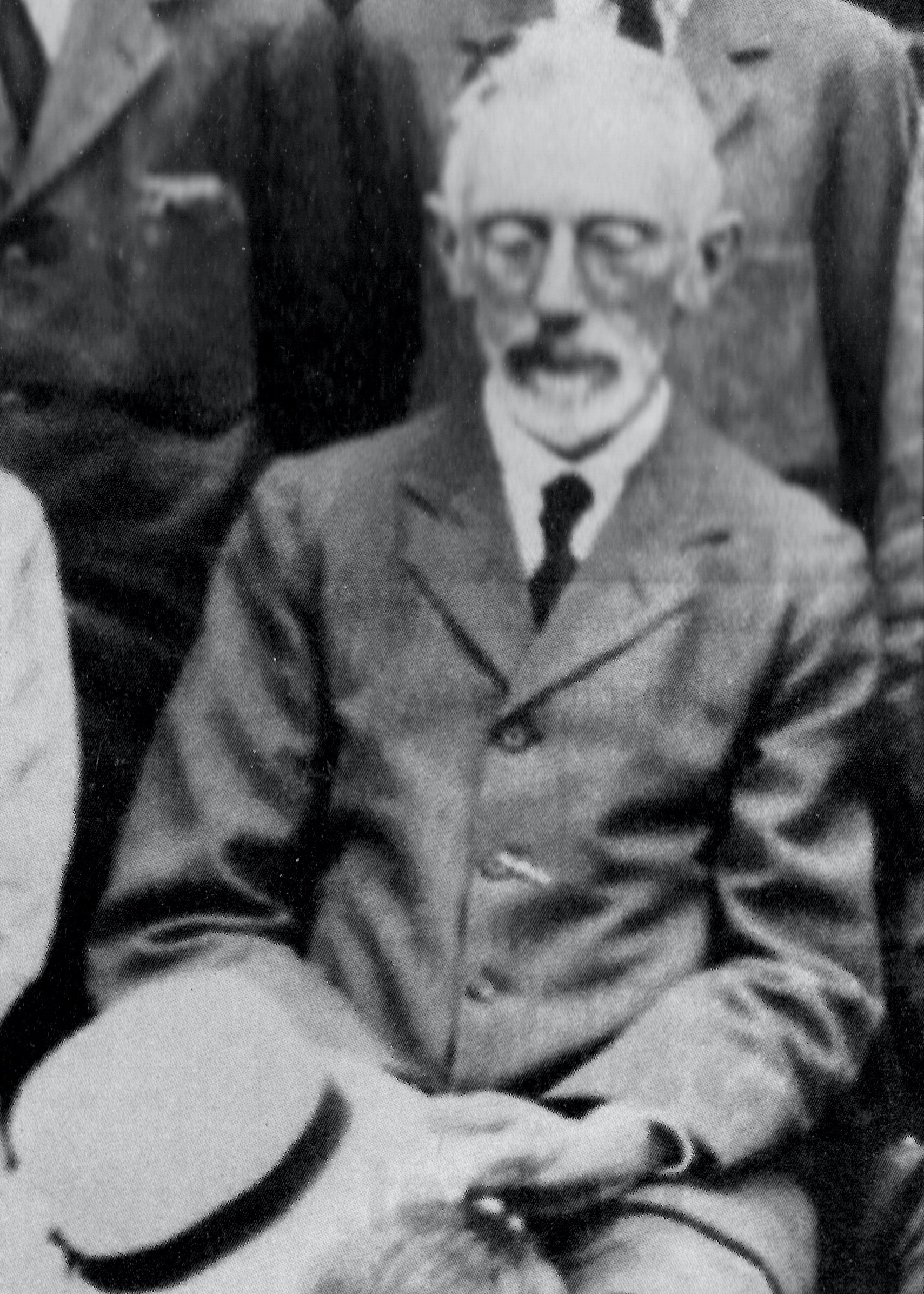
Irwin's school almost certainly folded at some point in 1904.
Beyond that, little has been known of his life after the time
represented in Ulysses, and no photographs were known
to exist. But a short article titled "Deasy Found! Life After
Ulysses," printed in vol. 5 of The Bloomsday
Journal for Bloomsday 2024, reports a new discovery by
T. E. Crowe: Irwin left Ireland in 1916 and took a job as an
assistant master at the Hardenwick Preparatory School in
Harpenden, Hertfordshire. A Hardenwick class photo shows him
as an elderly gentleman, not too different perhaps from the
kind of figure that Joyce wished to conjure up in Nestor.
The caption accompanying the detail published in the article
describes Irwin as "quite frail looking, and in his early
60s," but the complete photo on the Hardenwick School website
identifies it as taken in 1929, when he would have been about
70, only a year or two away from his death in 1931.