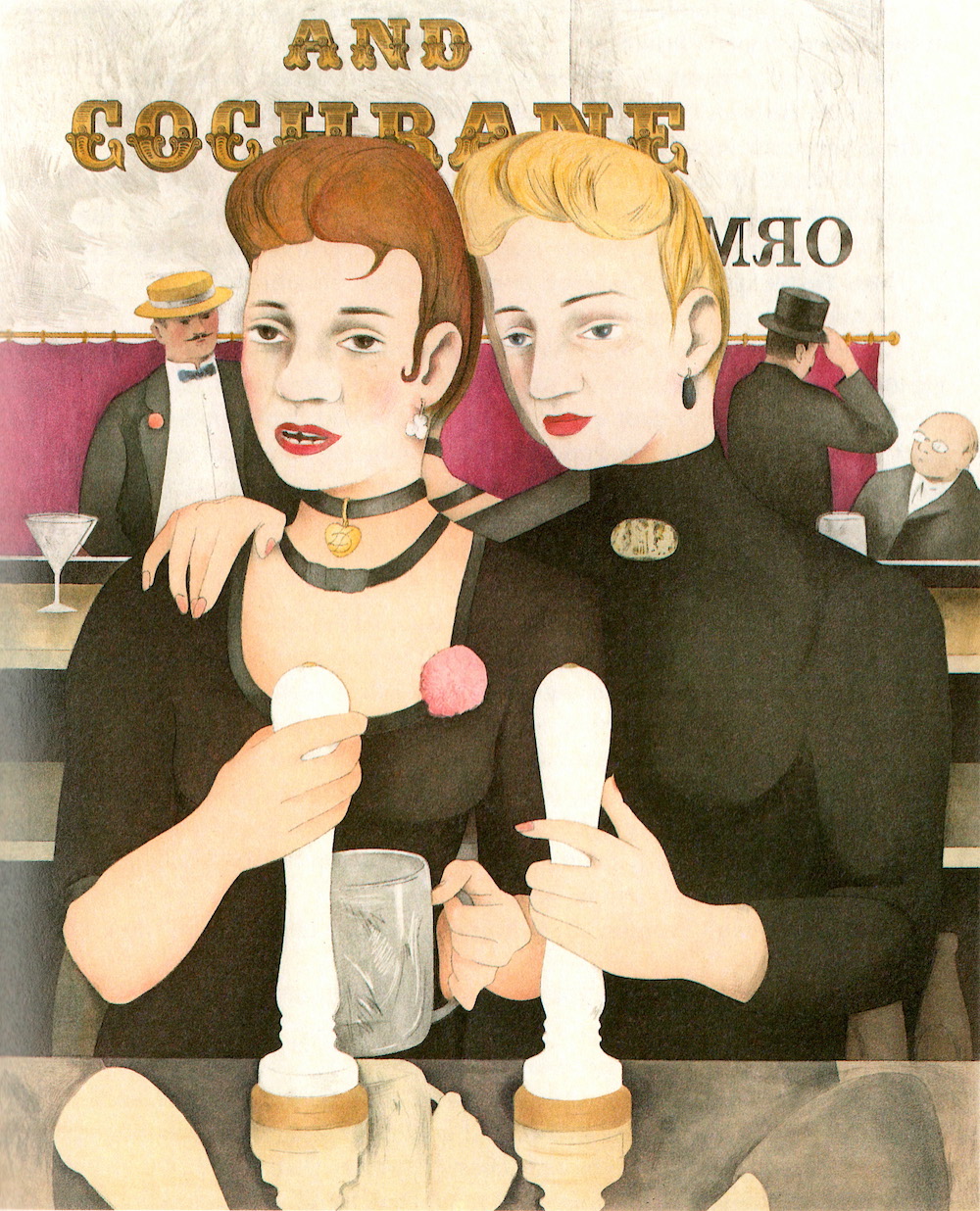
When the honorable Judge John M. Woolsey absolved Ulysses
of pornographic intent, finding that it seeks to accurately
represent human consciousness ("his locale," after all, "was
Celtic and his season Spring") and that "nowhere does it tend
to be an aphrodisiac," he charitably overlooked certain steamy
passages. One of the most egregious occurs in Sirens,
first announced in the overture: "Fro. To, fro. A baton cool
protruding." The longer passage that this fragment anticipates
imitates masturbation quite explicitly. It is pretty good
pornographic writing—suggestive of graphic action, but not
merely suggestive or merely graphic; evocative of various
kinds of physical pleasure, emotional involvement, and desire;
and palatable to both genders.
Listening to Ben Dollard sing The Croppy Boy, Lydia
Douce melts in commiseration for the unfortunate youth. The
action of her hands suggests that something more than maternal
sympathy is involved:
On the smooth jutting beerpull laid Lydia hand,
lightly, plumply, leave it to my hands. All lost in pity for
croppy. Fro, to: to, fro: over the polished knob (she knows
his eyes, my eyes, her eyes) her thumb and finger passed in
pity: passed, repassed and, gently touching, then slid so
smoothly, slowly down, a cool firm white enamel baton
protruding through their sliding ring.
To give Judge Woolsey's argument its due, Joyce's sentences
do represent the contents of human consciousness, and to
anyone who dislikes pornography their artistic merit might
possibly be defended on those grounds. But pornography it
certainly is, and the fact that the humans involved are female
would only have heightened the ire of that era's pervasive
morality police, if they had been good enough readers to
suspect the passage of a dark design. The chapter that most
excited their outrage, Nausicaa, did so not only by
making a respectable young woman the object of a lascivious
male gaze but also by making her a willing, and more or less
witting, participant in the excitement.
The same is true here, where the bold flirtation that the
barmaids have been carrying on with the customers, the
admiring gazes that they have been receiving from them, the
maternal pity that Lydia Douce feels for the croppy boy
("Because their wombs," Bloom thinks), and the sense of danger
the song gives her ("Thrilled she listened, bending in
sympathy to hear"), all feed into the suggestive action that
she performs. Bloom looks at her "Blank face" and thinks,
"Virgin should say: or fingered only," but, as with Gerty
MacDowell two chapters later, lack of conscious awareness does
not imply lack of desire.
In the musical theme-and-variations manner characteristic of
Sirens, this passage cunningly repeats something that
Lydia said much earlier in the episode and imbues it with
lustful coloration. Recently returned from a vacation at the
beach, Miss Douce has asked Miss Kennedy,
— Am I awfully
sunburnt?
Miss bronze unbloused her neck.
— No, said Miss Kennedy.
It gets brown after. Did you try the borax with the cherry
laurel water?
Miss Douce halfstood to see her
skin askance in the barmirror gildedlettered where hock and
claret glasses shimmered and in their midst a shell.
— And leave it to my hands, she said.
— Try it with the glycerine, Miss
Kennedy advised.
Hands that tend to her own body may also tend to a man's. As Joyce
replied to a young admirer in Zurich who asked, "May I kiss
the hand that wrote Ulysses?": "No, it did lots of
other things too."