Gerty MacDowell remembers a moving poem she read in a
newspaper: "Art thou real, my ideal?" The line suits
her feverish fantasy of meeting Mister Right, but anyone in a
more sensible frame of mind might reply, Of course not, you
idiot! It is the nature of ideals to exceed reality, and
reality always falls short of them. One imagines Joyce cooking
up the words in one of his more savagely playful moments, but
Stephen Hero indicates that he found them in an actual
poem he encountered at university. The proto-novel attributes
it to a fictional character, "Hughes," but Nausicaa
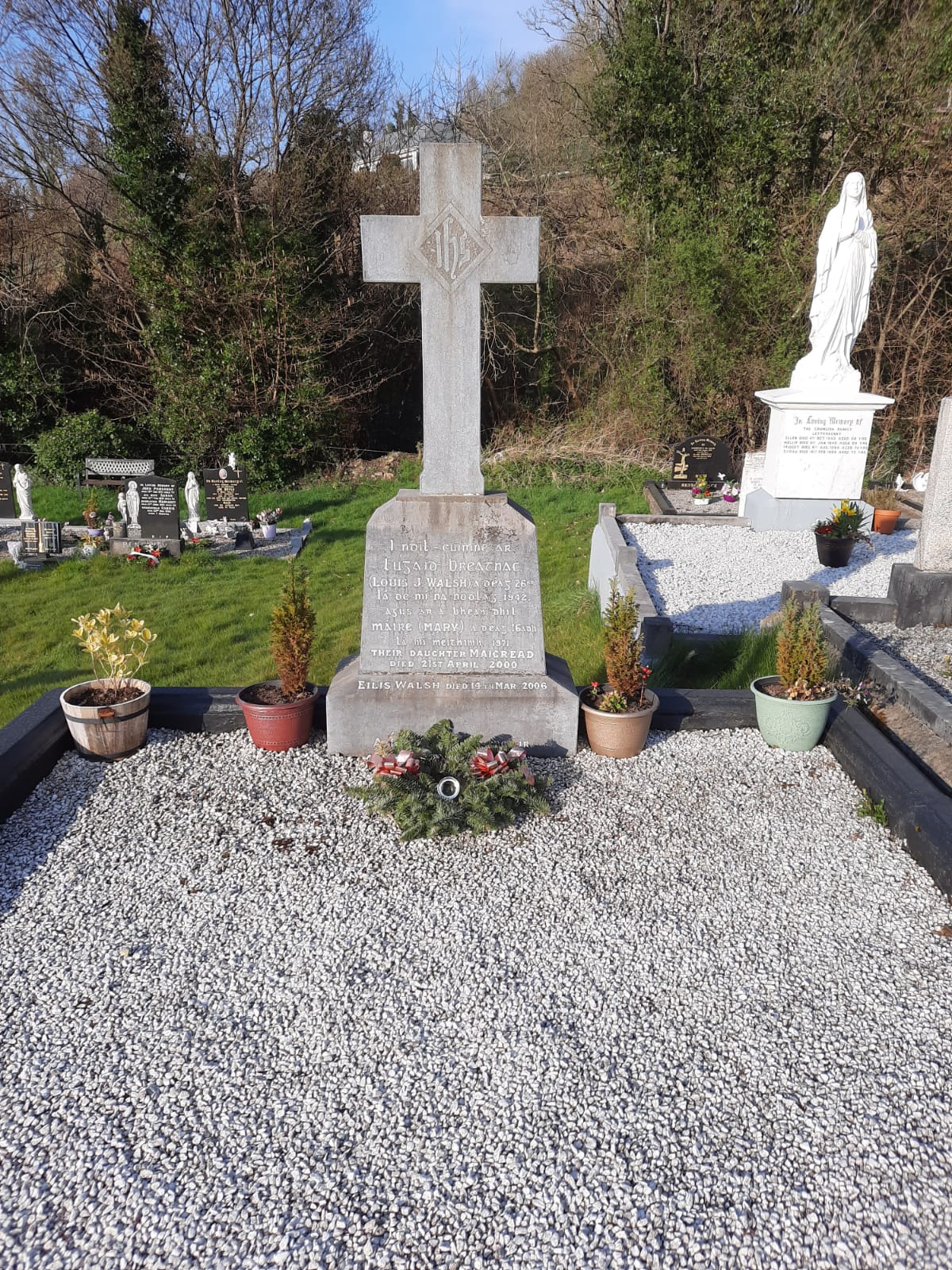
pegs it to a real person, one Louis J. Walsh.
Gerty feels "that she too could write poetry if she could
only express herself like that poem that appealed to her so
deeply that she had copied out of the newspaper she found one
evening round the potherbs. Art thou real, my ideal?
it was called by Louis J. Walsh, Magherafelt, and after
there was something about twilight, wilt thou ever?
and ofttimes the beauty of poetry, so sad in its transient
loveliness, had misted her eyes with silent tears that the
years were slipping by for her, one by one." Louis Joseph
Walsh was born in Maghera, a town in the civil parish of
Magherafelt in County Londonderry, in 1880. At the beginning
of the 20th century he was studying law at University College
Dublin. Later he practiced law as a solicitor in Maghera, and
after independence he was made a district judge in County
Donegal. He published a number of books and stage plays.
Walsh was an ardent nationalist active in the Gaelic League
and Sinn Féin, and that detail fits the portrait of Hughes in
Stephen Hero. He is introduced as the teacher of an
Irish language class, "a young man in spectacles with a very
sick-looking face and a very crooked mouth. He spoke in a
high-pitched voice and with a cutting Northern accent" (59).
He is "a great enthusiast" for Irish nationhood, an aspiring
orator, and a quoter of verse. Stephen scorns him: "One of
these days he will be a barrister, a Q.C. [Queen's Counsel],
perhaps a judge—and yet he sneers at the Parliamentary Party
because they take an oath of allegiance" (63).
Hughes is also a poet, according to one of Stephen's
classmates, and "He writes for our paper"—a detail which fits
with Gerty's having found Walsh's poem in a newspaper. Madden
hands Stephen a handwritten poem, presumably submitted to him
for publication. Consisting of four stanzas of eight lines
each, it is titled "My Ideal."
Each stanza began with the words "Art thou real?"
The poem told of the poet's troubles in a "vale of woe" and of
the "heart-throbs" which these troubles caused him. It told of
"weary nights" and "anxious days" and of an "unquenchable
desire" for an excellence beyond that "which earth can give."
After this mournful idealism the final stanza offered a
certain consolatory, hypothetical alternative to the poet in
his woes: it began somewhat hopefully:
Art thou real, my Ideal?
Wilt thou ever come to me
In the soft and gentle twilight
With your baby on your knee?
The effect of this apparition on Stephen was a long
staining blush of anger. The tawdry lines, the futile change
of number, the ludicrous waddling approach of Hughes's
"Ideal" weighed down by an inexplicable infant combined to
cause him a sharp agony in the sensitive region. (82-83)
The clumsy absurdities of the poem would have given Joyce
enough reason to recall a couple of lines from the final
stanza and wrap them around some kitchen produce. But the
mention of the author—under his real name this time—suggests
some personal animus. The source of that bad feeling is not
hard to find. Joyce and Walsh found occasions to clash in
meetings of the Literary and Historical Society, a UCD
debating union established by John Henry Newman at the
university's outset in 1855.
Ellmann notes that Joyce "was elected to the executive
committee of the society on February 18, 1899, and was
nominated to be treasurer on March 21, but was defeated by
'the boy orator' L. J. Walsh" (70); in 1900 Walsh "won the
society's gold medal for oratory over Joyce" (96). A deeper
cause for resentment arose in February 1902, when Joyce read a
paper on James Clarence Mangan to the society. It was
exceptionally well received by most of the audience, but Walsh
rose to accuse Joyce of "unpatriotically ignoring the fact
that Mangan was one of the men of '48" (96). In My
Brother's Keeper Stanislaus Joyce speculates that
something else was at stake: "The student from Magherafelt, to
whom I have already alluded, Walsh by name, made it the
occasion for a personal attack upon my brother, based not on
the paper but on 'The Day of the Rabblement'. And perhaps not
altogether on that either" (165). Stephen Hero presents
what is either a fictionalized version of this attack or an
account of one two years earlier when Joyce lectured on Ibsen
to the society:
The climax of aggressiveness was reached when Hughes
stood up. He declared in ringing Northern accents that the
moral welfare of the Irish people was "menaced by such
theories." They wanted no foreign filth. Mr Daedalus might
read what authors he liked, of course, but the Irish people
had their own glorious literature where they could always find
fresh ideals to spur them on to new patriotic endeavours. Mr
Daedalus was himself a renegade from the Nationalist ranks: he
professed cosmopolitism. But a man that was of all countries
was of no country—you must first have a nation before you have
art. (103)
Clearly Joyce carried unpleasant memories of "Louis J.
Walsh, Magherafelt" from these days and found a way to
mock his asinine aesthetics in Nausicaa. An
interpretive loose end nags at the writer of this note,
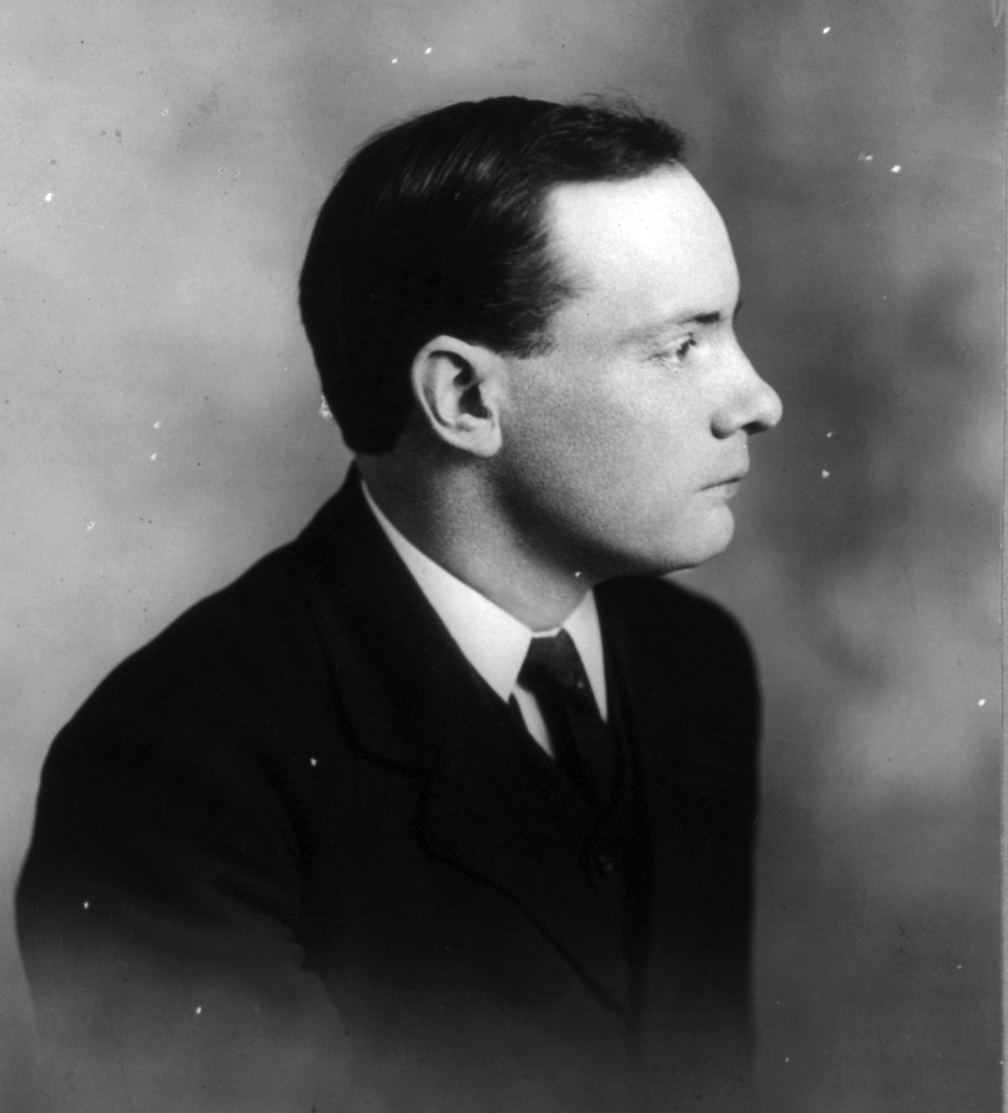
however. Joyce briefly studied the Irish language with Patrick
Pearse and reportedly quit the class because Pearse had
offered the word "thunder" as an example of the inferiority of
the English language. Pearse too was an ardent nationalist and
a writer of poems (in both Irish and English), and having been
born on 10 November 1879 he was at most one year older than
Walsh. Walsh must have been the primary model for Hughes, but
there are enough echoes of Pearse to give one pause. A very
striking one comes up in Stephen Hero: having read the
dismal dreck titled "My Ideal," Stephen decides that
"attendance in Mr Hughes's class was no longer possible for
him" (83).
I am not sure how to account for this strange overlap.
Perhaps Walsh was learning the language from Pearse (Vivien
Igoe says that he was) while simultaneously conducting a
beginner's study group of his own. That would be consistent
with Stephen Hero's observation that Hughes often
speaks at meetings of the Gaelic League "but as he did not
know enough Irish he always excused himself at the beginning"
for having to speak in English (60). It seems more likely,
though, that Hughes is a teacher because, within the confines
of the fiction, Joyce mapped some of his experiences with
Pearse onto him. In addition to the tale of Stephen leaving
the class in disgust, the novel gives Hughes qualities very
distinctive of Pearse: "He never lost an opportunity of
sneering at seoninism [West Britonism] and at those who would
not learn their native tongue. He said that Beurla [English]
was the language of commerce and Irish the speech of the soul
and he had two witticisms which always made his class laugh.
One was the 'Almighty Dollar' and the other was the 'Spiritual
Saxon'" (59).
If Hughes does combine qualities of Walsh and Pearse, that
fact should not dismay anyone familiar with Joyce's fictive
methods in Ulysses. But here the compression feels
awkwardly forced: how could Hughes be both a teacher of Irish
and mostly ignorant of the language?