Ginger
cordial
After taking an order for "Five number ones," Stephen turns
respectfully to the older man in the group and gets a modest
request: "You, sir? Ginger cordial. Chase me, the cabby's
caudle. Stimulate the caloric." The penultimate sentence here
appears to come from someone laughing at Bloom's weak
alcoholic appetite. The final one may be more of the same, or
it may be Bloom defending his choice of drink. In either case,
someone is invoking an outmoded scientific theory to claim
that ginger is healthful.
In Lotus Eaters
Bloom has thought of ginger ale as a "temperance beverage,"
marketed to people who want to avoid drinking. His "Ginger
cordial," made from ginger root, lemon peels, water, some
form of sugar, and an acidic preservative, is a concentrated
syrup rather than a carbonated soft drink, but it too probably
contains little alcohol. Gifford remarks that it was "Widely
advertised as a temperance drink."
Ginger ale, which had become hugely popular by 1904 owing to the
business founded by Irish doctor Thomas Joseph Cantrell in the
1850s, no doubt contained some alcohol from the fermentation
process, but the amount could be tightly controlled. Some ginger
cordials added alcohol in the form of brandy or pure spirits:
the "King's Ginger," created in 1903 for the heavy-drinking King
George VII, contained quite a lot. But it seems likely that
Bloom orders a bottle because he knows that, like ginger ale, it
will leave his head clear. In Cyclops he has strenuously
resisted calls to come have a drink, "Bloom saying he wouldn't
and he couldn't and excuse him no offence and all to that and
then he said well he'd just take a cigar."
The notion that Bloom is ordering something relatively
nonalcoholic is supported by the following sentence: "Chase
me, the cabby's caudle." Cabbies drinking on the job
endangered public health, and cabman's shelters erected in the
final decades of the 19th century offered food and warm drinks
but no alcohol. Perhaps some of these shelters offered caudles,
which were warm sweet drinks normally whipped up for invalids
and postpartum mothers. Caudles contained wine or ale but it was
diluted with other ingredients to make a brew regarded as
healthful. In earlier eras they had often contained a lot of
milk and eggs, like an eggnog, but by Victorian times the chief
ingredient seems to have been an oatmeal gruel augmented with
sugar and spices. The 11th edition of the Encyclopaedia
Britannica (1910) calls the caudle "a drink of warm
gruel, mixed with spice and wine, formerly given to women in
childbed."
The medical students in the bar would be aware of this drink's
history in treating postpartum weakness, so it may be one of
them who is speaking. He seems to imply that Bloom is not
avoiding alcohol altogether, but indulging in the way a frail
woman would. When Stephen declares, a couple of sentences later,
that he will be drinking "Absinthe"—strongly alcoholic,
hallucinogenic, and deranging—someone says, "Caramba! Have
an eggnog or a prairie oyster." This already inebriated man
needs to tone it down, in other words, while Bloom needs to man
up.
The reputed health benefits of cordials and caudles clearly lie
behind someone's statement that Bloom has ordered a drink to "Stimulate
the caloric." Many Victorians believed that an invisible,
intangible fluid called "caloric" was responsible for dispersing
heat. Not yet fully aware of molecular motion (Brownian motion
was first observed in 1827, but it took a century for theorists
to adequately explain it), many in the 19th century followed
Antoine Lavoisier in supposing that heat was "an exquisitely
elastic fluid" that flowed from warmer objects to cooler ones.
Someone is drawing on this theory to suggest that ginger
cordials have healthful effects in the human body. The medical
student who has derided Bloom's "caudle" may still be talking
here, mocking a tired old claim about promoting bodily heat. But
it is equally possible that Bloom, hearing his choice of drink
mocked, is responding in his usual half-informed scientistic
manner: Weak drink? No, I am engaged in a thinking man's effort
to optimize my bodily fluids. This kind of flimsy
self-justification in the face of social ridicule becomes a
prominent theme in Circe.
John Hunt 2026
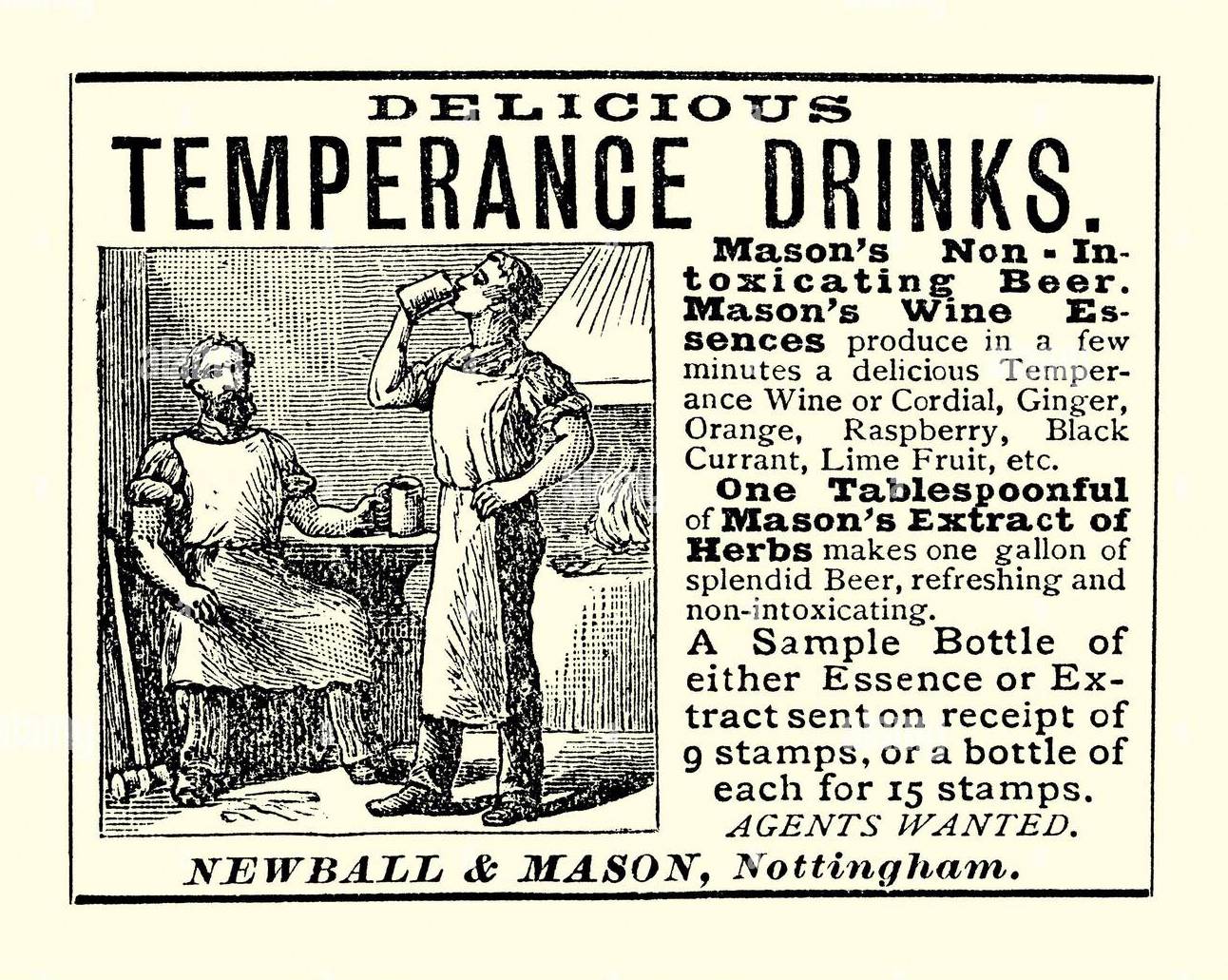
Advertisement for nonalcoholic drinks showing two men at work in
a forge, in an English magazine of 1890. Source: www.alamy.com.
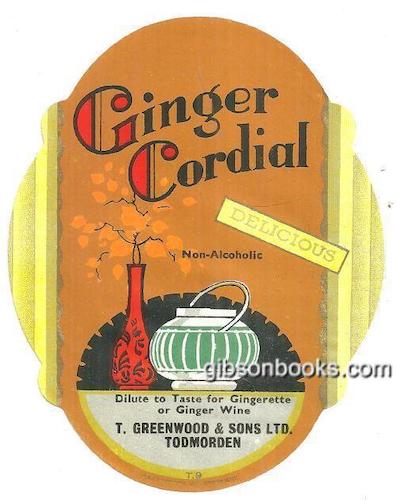
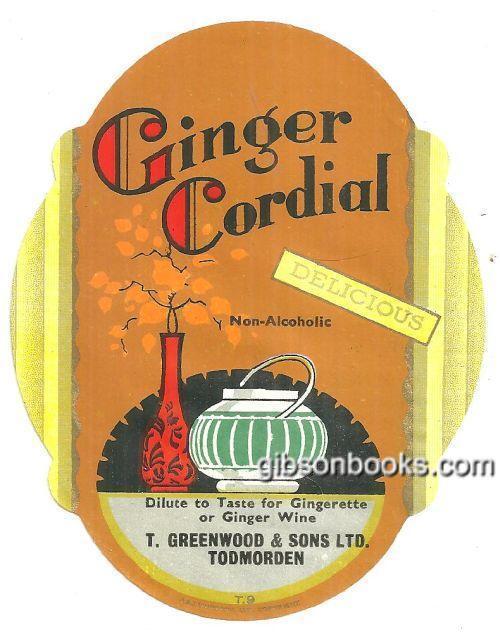
Label from an English bottle of non-alcoholic ginger cordial,
date unknown. Source: www.ebay.com.
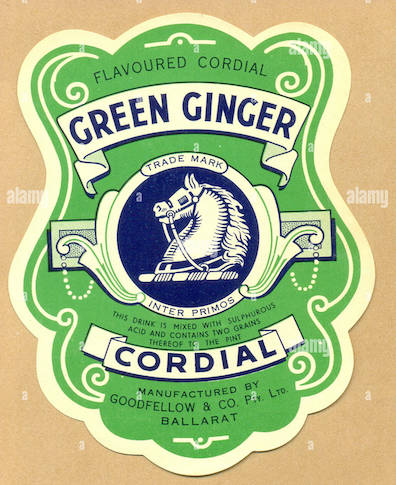
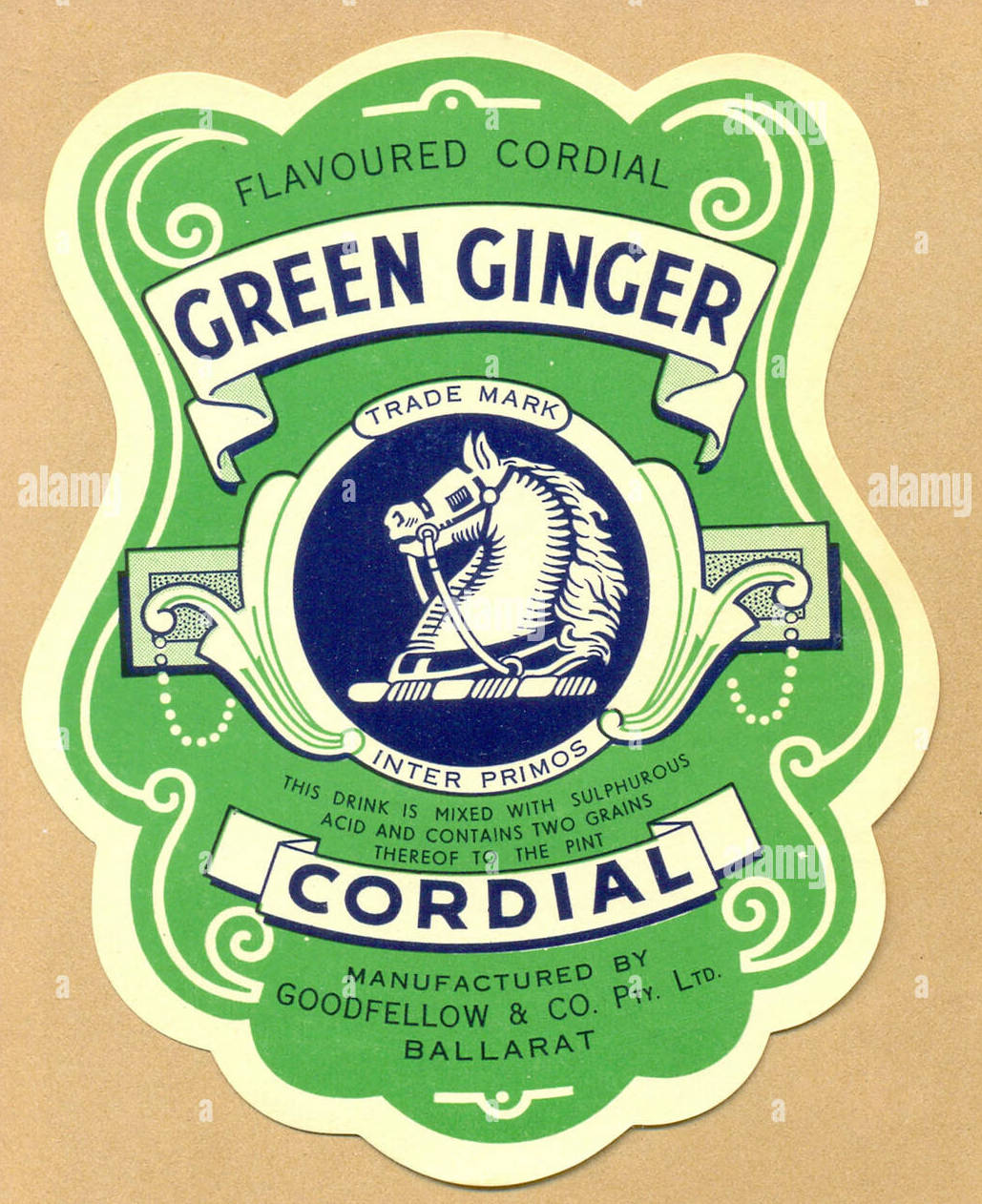
Label from an Australian bottle of ginger cordial, date unknown.
Source: www.alamy.com.