Interesting
condition
When Mulligan enters the hospital common room he launches
into ribald joking about his sexual potency. Then he sees
Bloom among the students and asks if he needs help with a
medical question. Bloom replies that he has come to inquire
about a patient "that was in an interesting condition, poor
lady, from woman's woe (and here he fetched a deep sigh) to
know if her happiness had yet taken place." The strange
diction here is not meant to suggest that Mrs. Purefoy's
unusually prolonged labor is somehow clinically "interesting."
In Italian idiom in stato interessante ("in an
interesting state") means simply "pregnant," and similar
usages were current among English speakers in the 19th
century. A clue to the origins of this expression can be found
in the word's etymological sense, "between-being," which
subtly communicates Bloom's concern for the woman's suffering.
In an article
titled "'Sounds are impostures': From Patronymics to Dante's Trombetta,"
Joyce Studies Annual 4 (1993): 43-54, Corinna del Greco
Lobner remarks that Bloom is "the only visitor to the House of
Horne who approaches the topic of childbirth with appropriate
reticence. It's only fitting, therefore, that he should inquire
after Mrs. Mina Purefoy by adopting a conventional Italian
euphemism for pregnancy, stato interessante" (46). Since
Bloom's Italian is almost nonexistent it seems unlikely that he
would be "adopting a conventional Italian euphemism," but it
does seem right to say that his euphemistic language (assuming
it is his, and not the narrator's) conveys a decorous tact that
the others in the common room sorely lack. Mulligan has been
joking about a "national fertilising farm," and after Bloom's
statement the unprofessional atmosphere continues with more
coarse joking about whether Mulligan's big belly means that he
is pregnant. "Interesting" emphasizes by contrast the polite and
respectful attitude that Bloom brings to the proceedings.
It is not necessary to speculate about whether Bloom could be
familiar with the Italian expression, because Victorians
resorted to similar tactful circumlocutions. Although advice
manuals for women referred explicitly to pregnancy, that state
implied having had sex, so popular discourse covered the shame
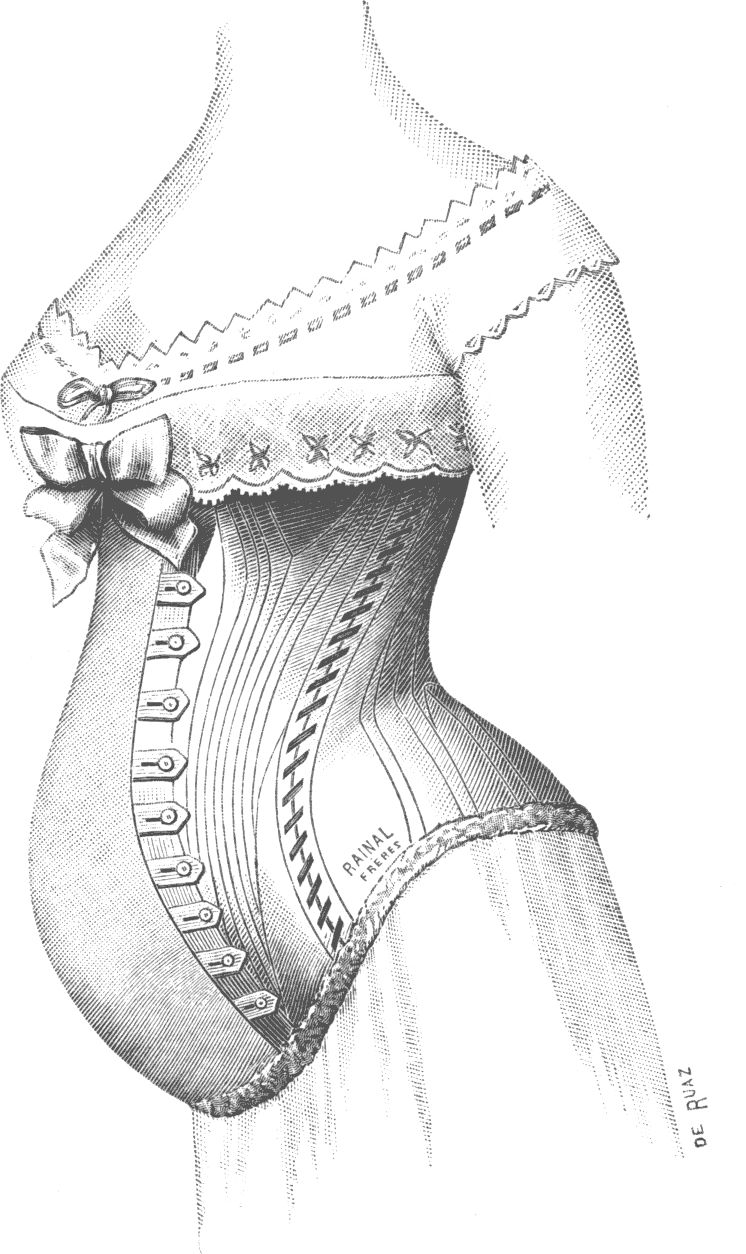
with euphemisms. Many women went into "confinement" once they
began to show and were said to be "expecting." When it became
necessary to refer to their physical condition they were often
said to be in "a delicate condition," "an interesting state," or
"the family way." The Manchester Courier and Lancashire
General Advertiser referred to Queen Victoria's first
pregnancy on 25 April 1840 as her "interesting situation."
In Nicholas Nickleby (1838-39) Dickens writes that Mrs.
Lenville, "as has been hinted before, was in an interesting
state," and in a 10 August 1848 letter he sardonically
observed that "Mrs. Dickens being in an uninteresting
condition, has besought me to bring her out of London for
two months."
In a page on The Victorian Web (victorianweb.org), Mary
Elizabeth Leighton and Lisa Surridge note that this word carries
precise etymological implications: "Derived from the Latin inter
(between) and esse (be), interesting was
commonly used to convey a suspended or incomplete state, as in a
cricket game being 'in a very interesting condition' or a
missionary commenting that 'there are several families in an
interesting condition, and I trust they may soon be enabled
fully to make a profession of Christ'. The word's suggestion of
unknown outcomes implies that interesting was not merely a
euphemism but a subtle reference to the various unknowns of
pregnancy in an era of relatively high infant and maternal death
in childbirth."
There can be little doubt that the man who went on to write Ithaca
was fully aware of the word's etymological sense. Bloom has come
to the National Maternity Hospital because this "poor lady" has
been in a state of between-being for three excruciating days.
John Hunt 2026