Joyce conceived his final chapter not as a reunion of husband
and wife—that happens in Ithaca—but as a long
soliloquy serving as a kind of coda to the novel's action.
"Penelope," whose Technic one schema calls
"Monologue (female)," goes Proteus—"Monologue
(male)"—one better, by eliminating narrative entirely. Lying
awake in the dark, Molly weaves an ever-changing mix of
memories, expectations, judgments, questions, and desires,
perhaps in sympathy with the endless weaving and unweaving of
Homer's Penelope. The location is precise and unchanging—she
leaves her bed just once, to sit on the chamberpot next to
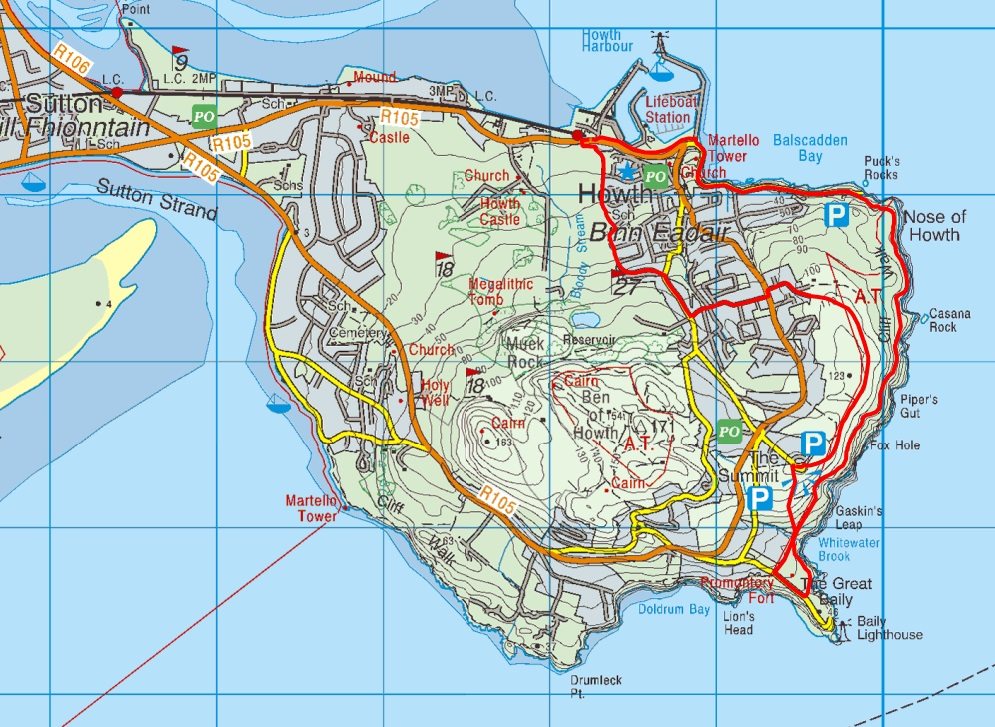
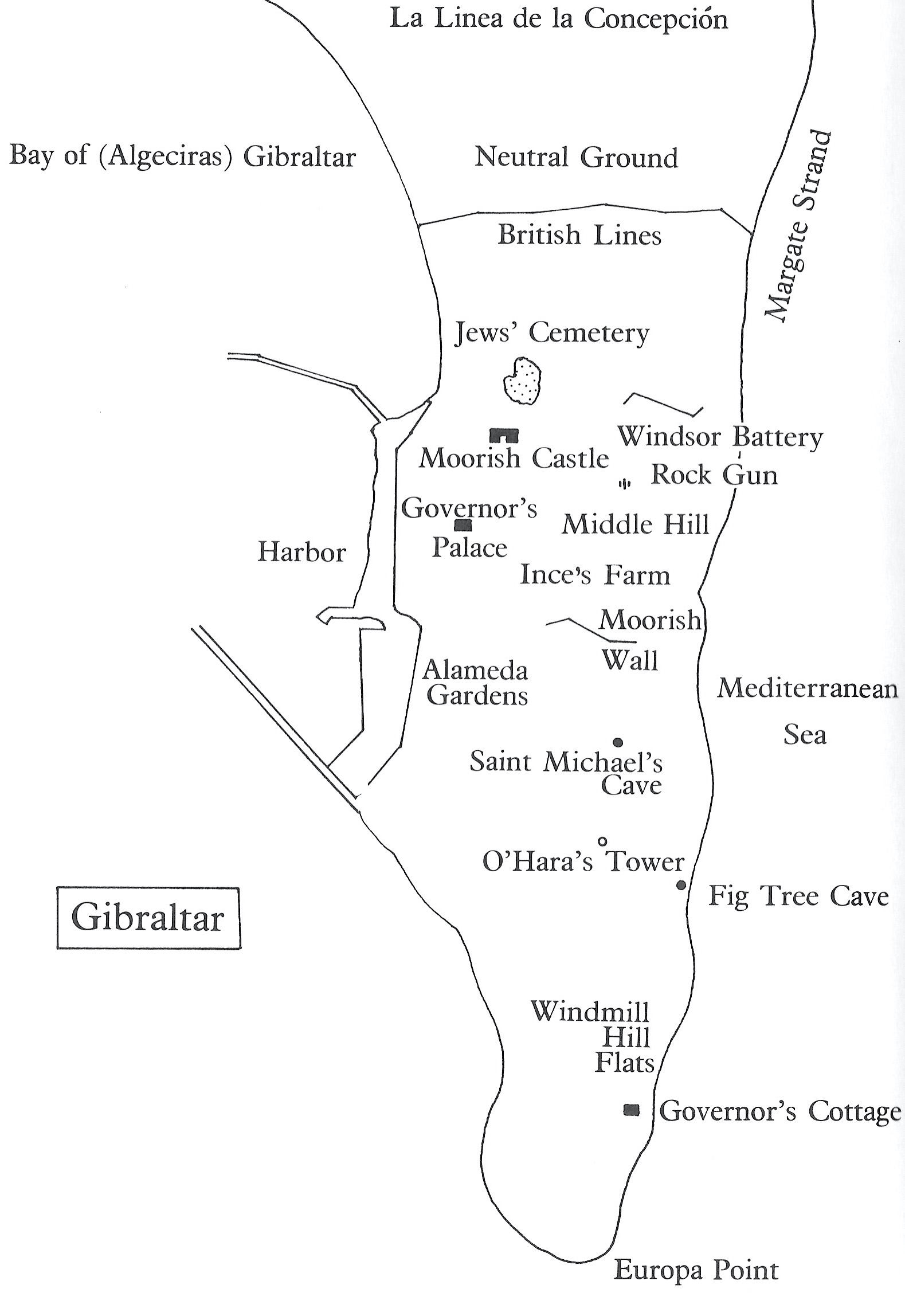
it—but her thoughts roam throughout Dublin and Gibraltar and
famously end on Howth Head. The time is more or less
knowable—after 2 or 3 AM, not yet dawn—but in Molly's mind
time seems barely to exist. Gilbert's schema lists no Hour for
the chapter, while Linati's gives the mathematical symbol of
infinity: ∞. Present consciousness is all there is, treating
the distant past as if it were yesterday. Grammar too seems to
violate boundaries, as the text unfurls in eight long
unpunctuated blocks and one must labor to decide where one
syntactic cluster ends and another begins, or to whom the
pronoun "he" may refer at any given moment. But the impression
of syntactic strangeness disappears when the words are read
aloud. Molly's is the language of ordinary speech, with one
recurring touchstone: the affirmative word "Yes."
In book 23 of the Odyssey, Penelope's nurse Eurycleia
gleefully rouses her from sleep with the news that her husband
has returned and slaughtered all the suitors. Penelope is
doubtful, then overjoyed, then suspicious again. She goes
downstairs and regards the bedraggled stranger uncertainly,
and when Telemachus berates her for being hardhearted she
tells him, "we have our ways to recognize each other, /
through secret signs known only to us two" (108-9, trans.
Wilson). A test follows, as Penelope directs Eurycleia to pull
the bed out of their bedroom and make it up for the stranger.
Odysseus is enraged, because he made one of the bed's posts
from the trunk of an olive tree, still rooted in the ground.
Who has dared to hack into it? Since this secret was confided
to only one servant, Penelope knows the man must be her
husband, and the couple embrace. "They would have wept until
the rosy Dawn / began to touch the sky, but shining-eyed /
Athena intervened. She held night back" (242-44). In this
magically extended gap of time the long-separated partners
make love, tell each other their stories, and at last sleep.
Joyce's version seems as different as could be. After
nestling his face in his wife's buttocks, the cuckolded Bloom
drops off into weary slumber head-to-foot in their rickety
brass bed, with nary a thought of violent retribution. The
wife is not a paragon of chaste fidelity but an
unapologetically lusty adulteress who regards her spouse with
longsuffering, scathing bemusement. Nevertheless, a kind of
testing is taking place, as interrogation of Bloom's flaws is
balanced against appreciation of his virtues. By the end of
the chapter it feels as if a tipping point has been passed.
Molly thinks about how she might get Bloom to perform his
sexual obligations again, and her monologue concludes with a
rapturous memory of him kissing her and proposing marriage.
The tidal swing in her emotions does appear to have an
analogue in the tough-minded withholding of affection followed
by joyous affirmation found in Homer's poem. And the
unpunctuated text does make it seem as if time has been
strangely lengthened and suspended.
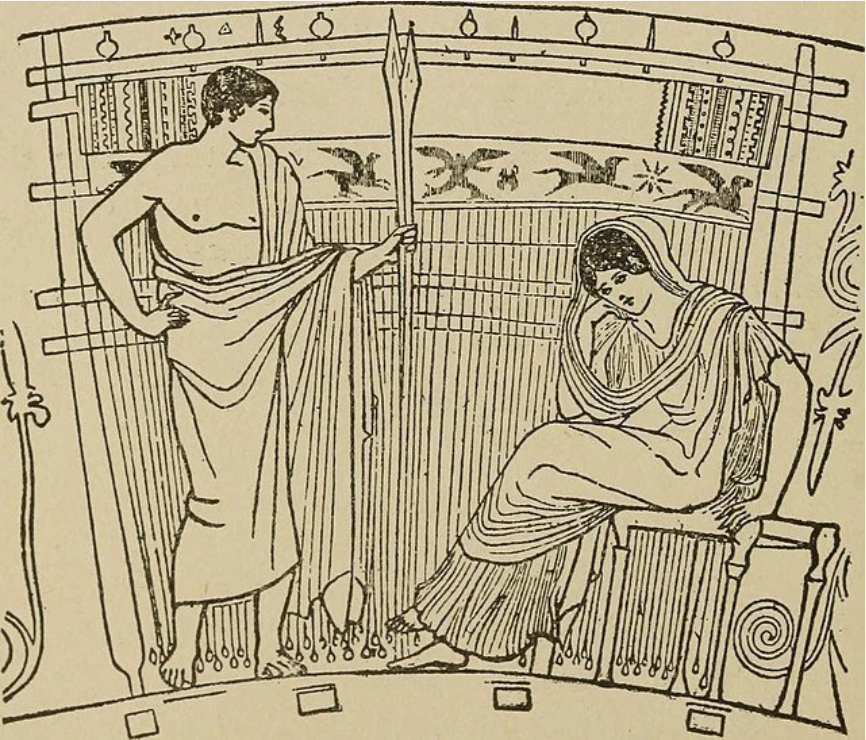
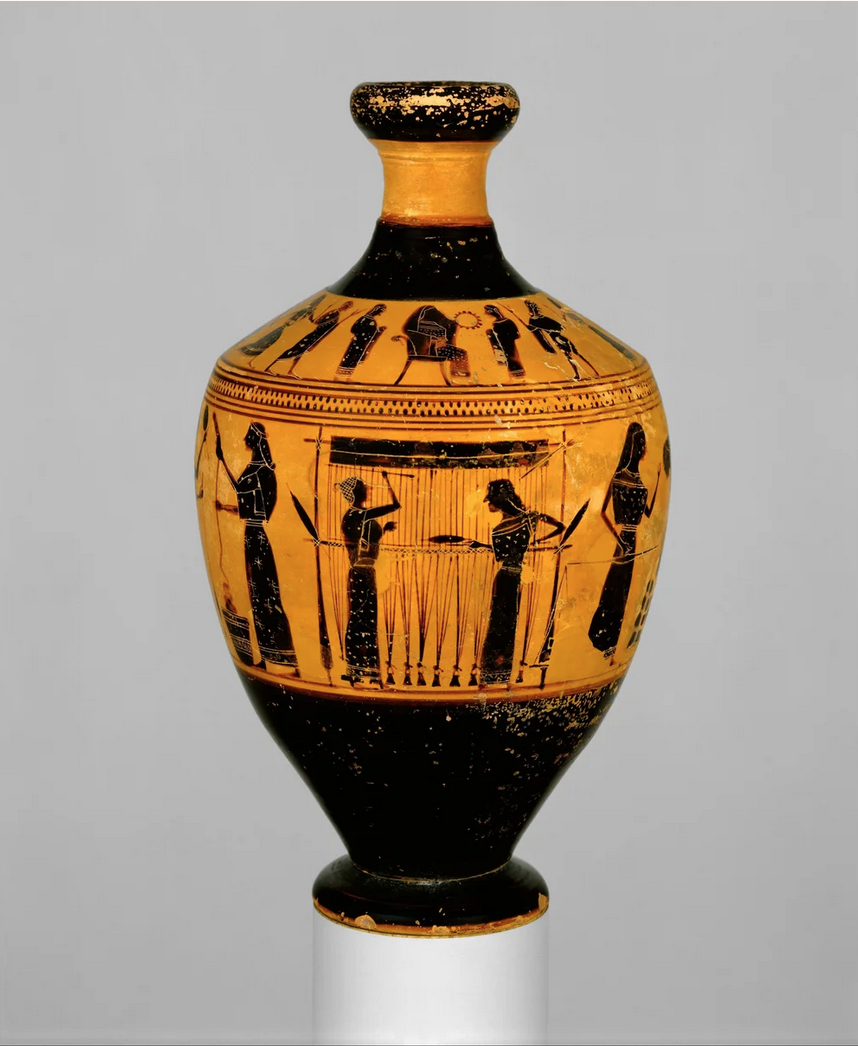
In terms of imagery, Joyce did nothing with Homer's olive
tree—a symbol of deeply rooted, long-enduring partnership.—but
he seems to have responded to Penelope's weaving. Antinous
recounts how she argued that before marrying she must make a
fine funeral shroud for her father-in-law Laertes: "And her
words made sense to us. / So every day she wove the mighty
cloth, / and then at night by torchlight, she unwove it. / For
three long years her trick beguiled the Greeks" (2.105-8). As
with Scheherazade's tale, the shroud remains unfinished, male
expectations are thwarted, and time is lengthened. This image
may lurk behind the seeming endlessness of Molly's monologue
and her perpetually revised opinions. Joyce suggested another
symbolic image in the Correspondences to the Gilbert schema:
"Penelope" corresponds to "Earth," he wrote, and her "Web" to
"Movement." In a letter he wrote that the final chapter "turns
like the great earthball slowly and surely and evenly round
and round spinning." Evidently he was toying with the idea
from the end of Ithaca that Molly resembles an
Earth-Mother, the Greek-Roman "Gea-Tellus." The image of a
globe perpetually moving but always returning to the same
point feels consistent with the weaving and unweaving of a
tapestry.
Joyce called the eight enormous chunks of text "sentences,"
and if this were grammatically accurate they would surpass the
most egregious instances in Faulkner's novels. But Molly's
words actually break down into discrete sentences of no great
length. It is often difficult to know where one ends and the
next begins, but reading the chapter aloud forces one to
decide. The impression of nearly endless sentences is in fact
an illusion. In writing Aeolus Joyce took an
uninterrupted succession of narrative incidents and created an
impression of discrete units by inserting newspaper-like
headlines throughout the text. In Penelope he worked
in an opposite way and deleted the punctuation marks one would
expect, including the apostrophes that can be seen in the
Rosenbach manuscript.
Derek Attridge has challenged the widespread notion that
Molly's monologue has a "flowing" quality. He notes that Joyce
himself never urged such an image on readers and speculates
that the impression derives mainly from the long sentences and
overriding of syntactic rules (Joyce Effects, 93-95).
In fact, though, Molly's "syntactic deviations are
characteristic of casual speech"; they are much less radical
than many in the interior monologues of Stephen and Bloom; and
her true sentences are far shorter than ones in Oxen of
the Sun, Cyclops, and Ithaca (96-98). As visual
readers "we take the uninterruptedness of print as a
conventionally sanctioned sign for an uninterruptedness of
thought" (100), but when the words are read aloud this
impression vanishes. Molly's thought-processes are simply
"those of someone unable to sleep after an extraordinary day
that has stirred memories and provoked desires; we would
expect such thoughts to be insistent, helter-skelter, widely
ranging, yet constantly circling around a few dominant
preoccupations" (100). Joyce's odd arrangement of words on the
page need not indicate unusual states of mind in his
character. After so many radical narrative experiments in the
second half of Ulysses, readers should know better
than to assume such a "naturalistic connection" (101).
Whether Molly's words should be heard as characteristically
female, and, if so, whether Joyce's representation of female
speech should be commended, are questions I will not take up,
but there can be little doubt that one impetus for his chapter
came from listening to women speak. Nora Barnacle provided one
model. Slote, Mamigonian, and Turner note another: "According
to Herbert Gorman, Molly's predilection for the word Yes
was inspired by Lillian Wallace, the wife of Richard Wallace,
an illustrator Joyce knew in Paris. One day, Joyce sat
listening as Mrs Wallace talked to a young painter at her
country house. 'The conversation was long-winded and dull and
as Joyce drowsily listened he heard his hostess continually
repeating the word "yes". She must have said it a hundred and
fifty times and in every possible nuance of voice. And
suddenly Joyce realized that he had found the motif word for
the end of Ulysses' (James Joyce, p. 281)."