In Wandering Rocks Patsy Dignam stands gazing at a
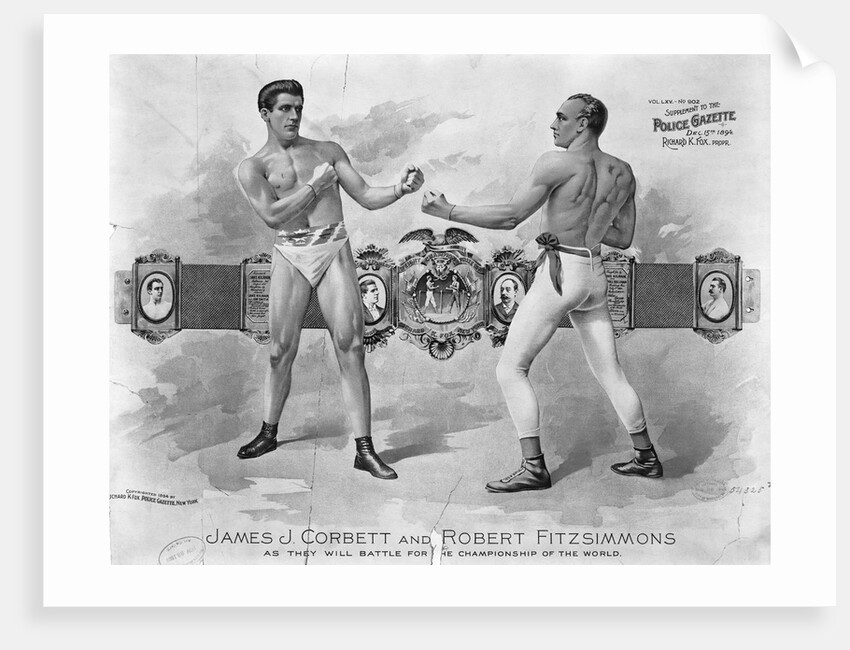
poster that shows "two puckers stripped to their pelts and
putting up their props," announcing that "Myler Keogh,
Dublin’s pet lamb, will meet sergeantmajor Bennett, the
Portobello bruiser, for a purse of fifty sovereigns. Gob,
that'd be a good pucking match to see. Myler Keogh, that's the
chap sparring out to him with the green sash. Two bar
entrance, soldiers half price." Young Dignam dreams of going
to the fight, but then he looks more closely: "When is it? May
the twentysecond. Sure, the blooming thing is all over."
Other characters know about the fight and the role Blazes
played in it. In Cyclops Alf Bergan tells his
companions that Boylan turned the betting odds in his favor by
starting a false rumor that his man was drinking heavily: "He
let out that Myler was on the beer to run up the odds and he
swatting all the time." In Lestrygonians Nosey
Flynn reports the same story, noting that Boylan sequestered "the
little kipper down in the county Carlow...For near a
month, man, before it came off. Sucking duck eggs by God
till further orders. Keep him off the boose, see? O, by God,
Blazes is a hairy chap."
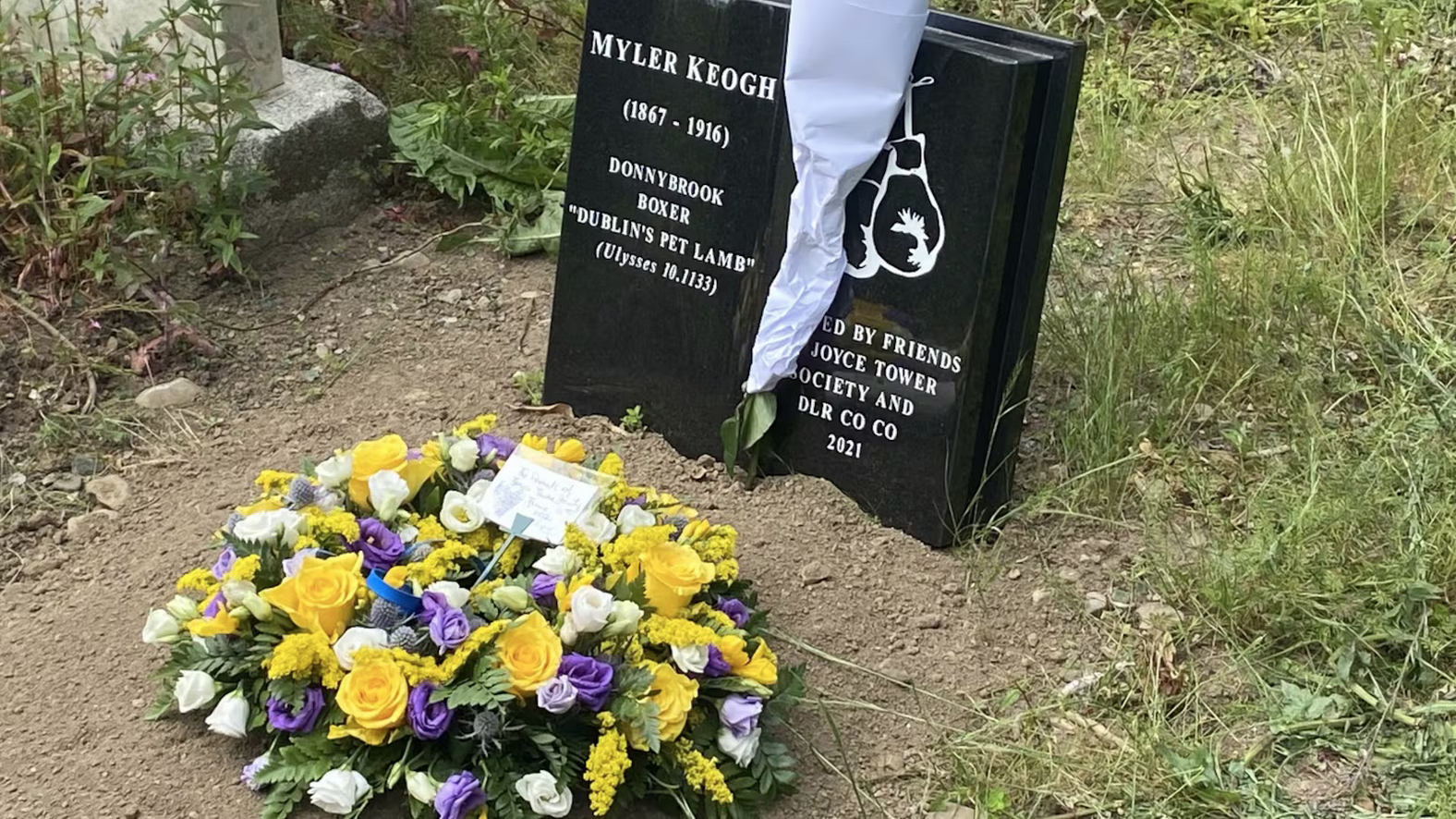
Myler Keogh was born in Donnybrook in 1867, the eldest son of
boxer and sawmill worker James "Clocker" Keogh. For five or
six years in the 1890s he was the middle-weight champion of
Ireland. Vivien Igoe says that his last fight was on 9 October
1903, but Frank McNally, in a 15 June 2021 Irish Times article,
suggests that it may have happened in 1904 when "Jem Roche of
Wexford knocked him out." Slote, Mamigonian, and Turner hold
that his career was over by 1904 but "Joyce evidently confused
him for another fighter with a similar name. The fight
mentioned here was the second round of a civil and military
tournament held at the Earlsfort Terrace Rink on 29 April
1904. This venue was frequently used for matches between
British soldiers and local civilian boxers. The civilian was
J. McKeogh, but his name was erroneously reported in the
press, with one variant being 'M. Keogh' (Freeman's
Journal, 29 Apr. 1904, p. 7, col. j), which probably
explains the confusion."
McKeogh did knock out his opponent, a private in the 6th
Dragoons named Garry, in the third and final round of this
match, so the report in Cyclops of a native son's
glorious victory over an Englishman is more or less accurate
even if Joyce got the wrong Keogh. But he took Garry out of
the story, replacing him with a British soldier named Percy
Bennett. Here Joyce was settling his own scores rather those
of his subjugated nation. The real Percy Bennett was an
English diplomat serving as consul-general in Zurich in 1917
when Joyce became involved in an embassy-supported project to
stage English-language plays. Colleagues knew him as "Pompous
Percy," Ellmann notes (425), and he was "annoyed with Joyce
for not having reported to the consulate officially to offer
his services in wartime, and was perhaps aware of Joyce's work
for the neutralist International Review of Feilbogen
and of his open indifference to the war's outcome" (423).
When Joyce fell out with consular worker Henry Carr, who
performed a role in The Importance of Being Earnest,
Bennett took Carr's side. Joyce retaliated by reducing him to
a "sergeantmajor" in the Portobello barracks and made Carr,
his subordinate, one of two drunken soldiers who assault
Stephen in Circe. Private Compton there warns Private
Carr, "Here, bugger off Harry. Or Bennett'll have you in the
lockup. Carr responds, "God fuck old Bennett. He’s a
whitearsed bugger. I don’t give a shit for him."
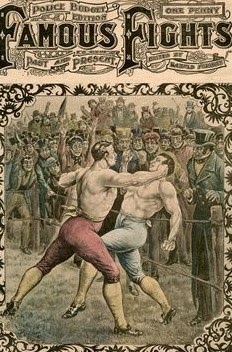
In a JJON essay, John Simpson observes that some 19th
century boxers adopted the ironic ring-name "lamb." One
English prize-fighter in particular, William Thompson, was
known by that name, perhaps because "His local support came
from a band of roughs known as the 'Nottingham Lambs'." "Pet,"
Simpson points out, is "one of the few high-profile English
words to derive from Gaelic." The phrase "pet lamb" came into
use in the 16th century to describe tame animals, and in the
19th century it became used in pugilistic circles to describe
a favorite boxer. Joyce evidences awareness of this trade
lingo in calling Keogh "Dublin's pet lamb," and
likewise in terming Bennett "the Portobello bruiser."
Simpson quotes newspaper references to the Bermondsey Bruiser
in 1859 and the Battersea Bruiser in 1905.